Buried defect
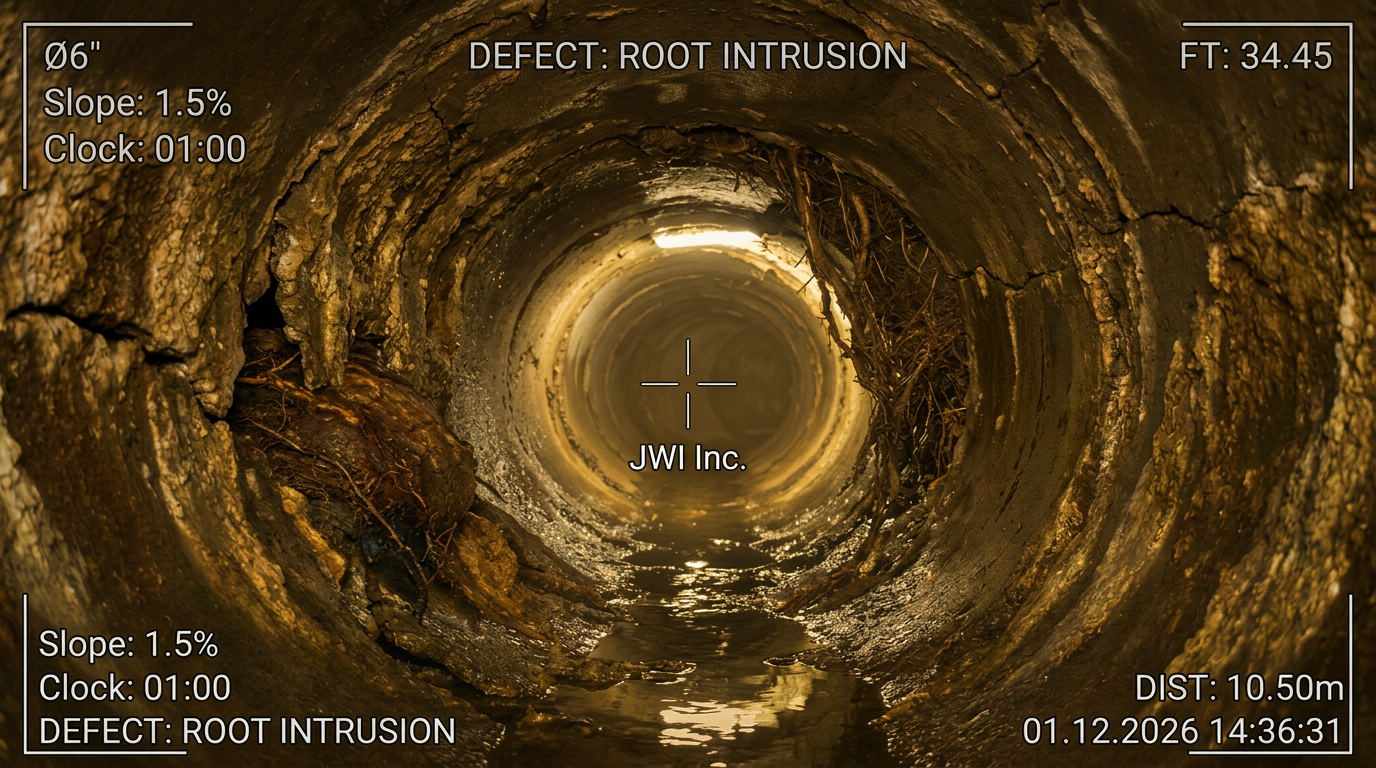
Root intrusion, joint separation, corrosion, offset joints, or infiltration identified on CCTV or after repeat backups.

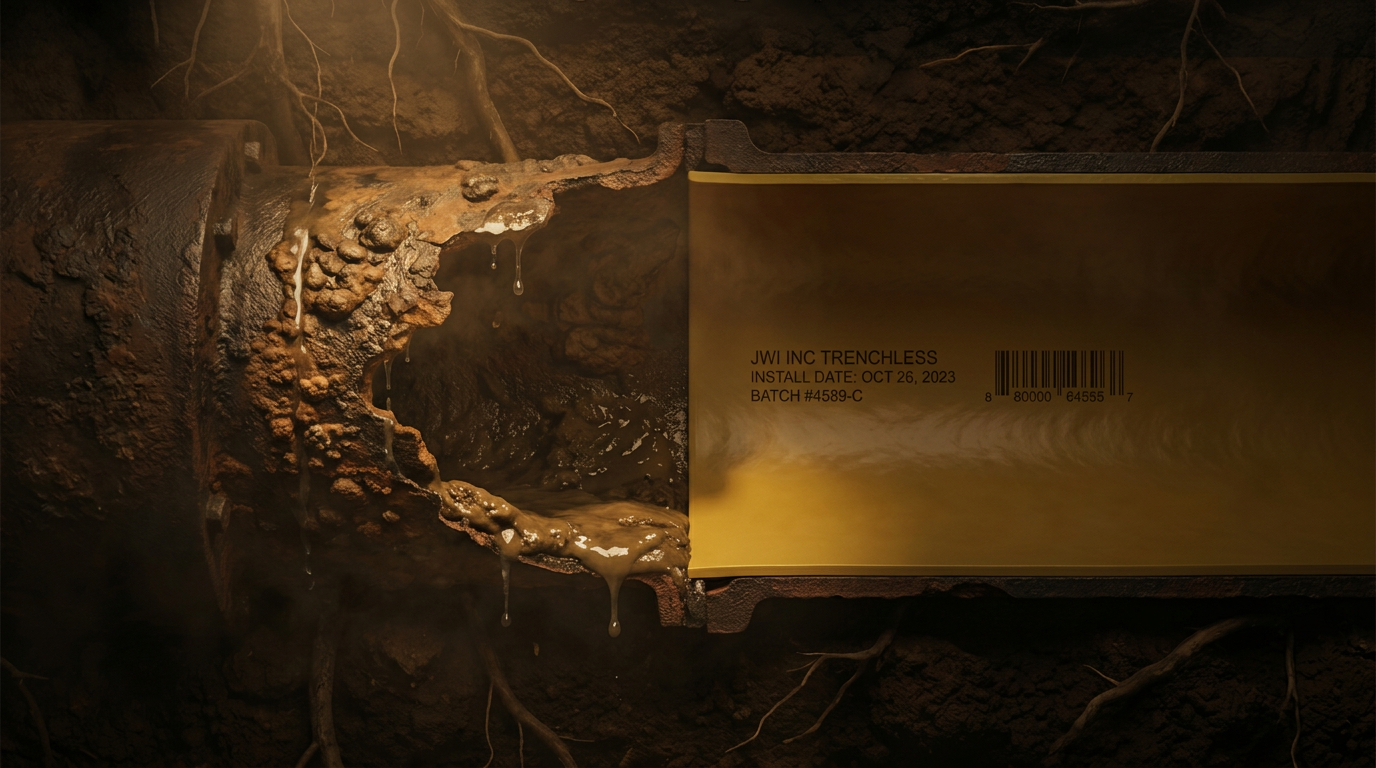
JWI reviews CCTV findings, pipe condition, access points, bypass needs, and shutdown limits to plan CIPP lining or related trenchless repair where the host pipe and site conditions support it.
Commercial, municipal, industrial, and institutional focus. Insurance and project documentation available upon request. Serving CT, NY, NJ, PA, and MA.
If CCTV, backups, surface distress, or inspection notes point to a failing sewer main, force main, or commercial pipeline segment, send the findings to JWI. We can review the information and discuss whether CIPP lining, spot repair, open-cut replacement, or another repair path may be appropriate.
Helpful to include
Step 1 of 4
Contact
Commercial, municipal, industrial, and institutional focus. Insurance and project documentation available upon request. Serving CT, NY, NJ, PA, and MA.
CCTV and field findings usually tell the story before excavation starts. Root intrusion, joint failure, infiltration, corrosion, and pipe deformation help determine whether CIPP lining, spot repair, or replacement belongs in the discussion.
Swipe or drag the divider to reveal the after image
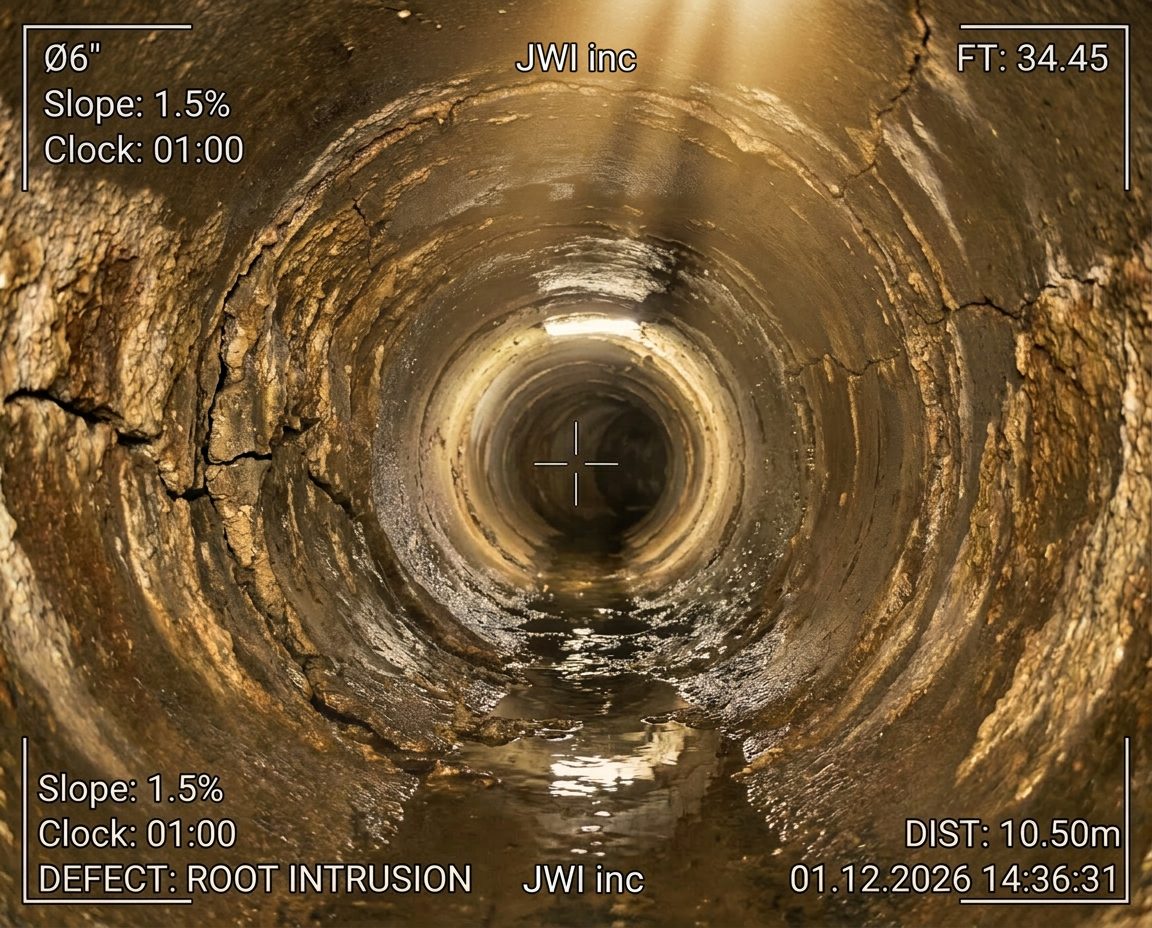
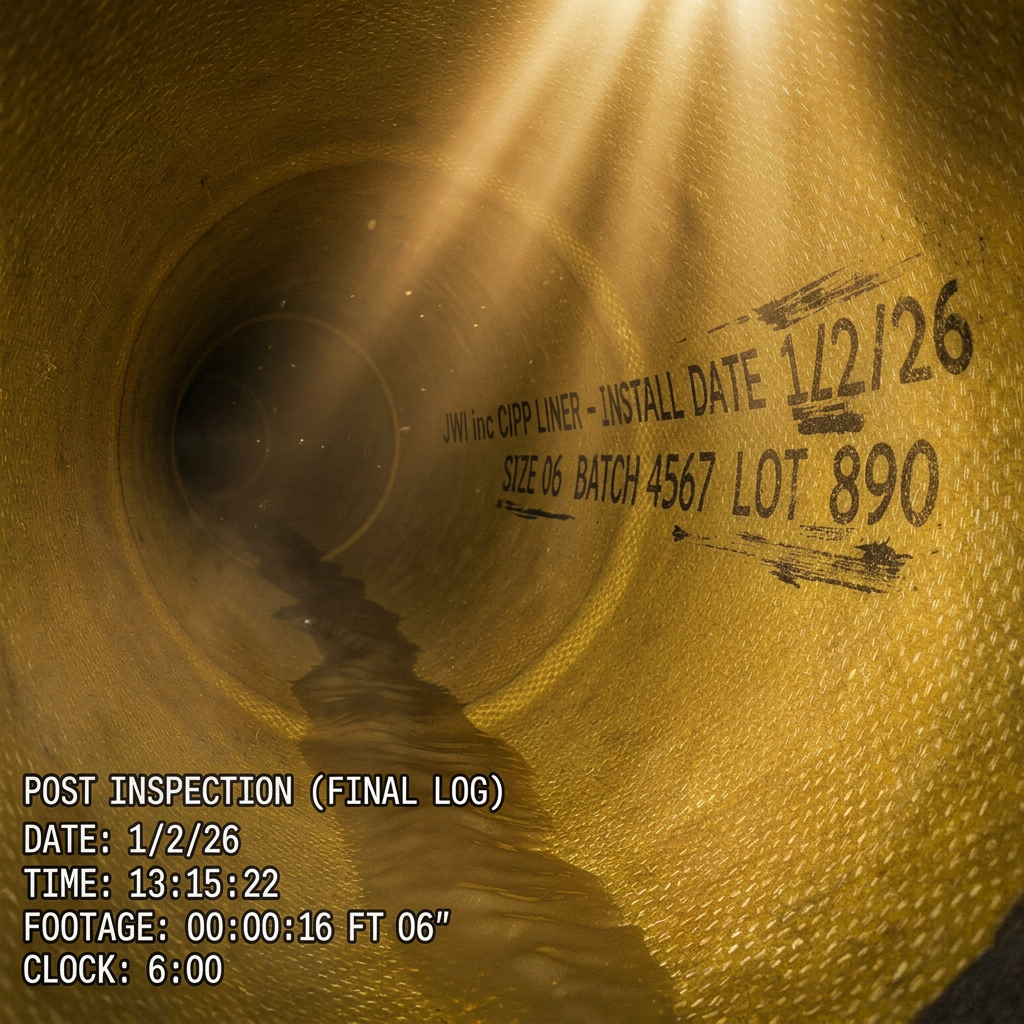
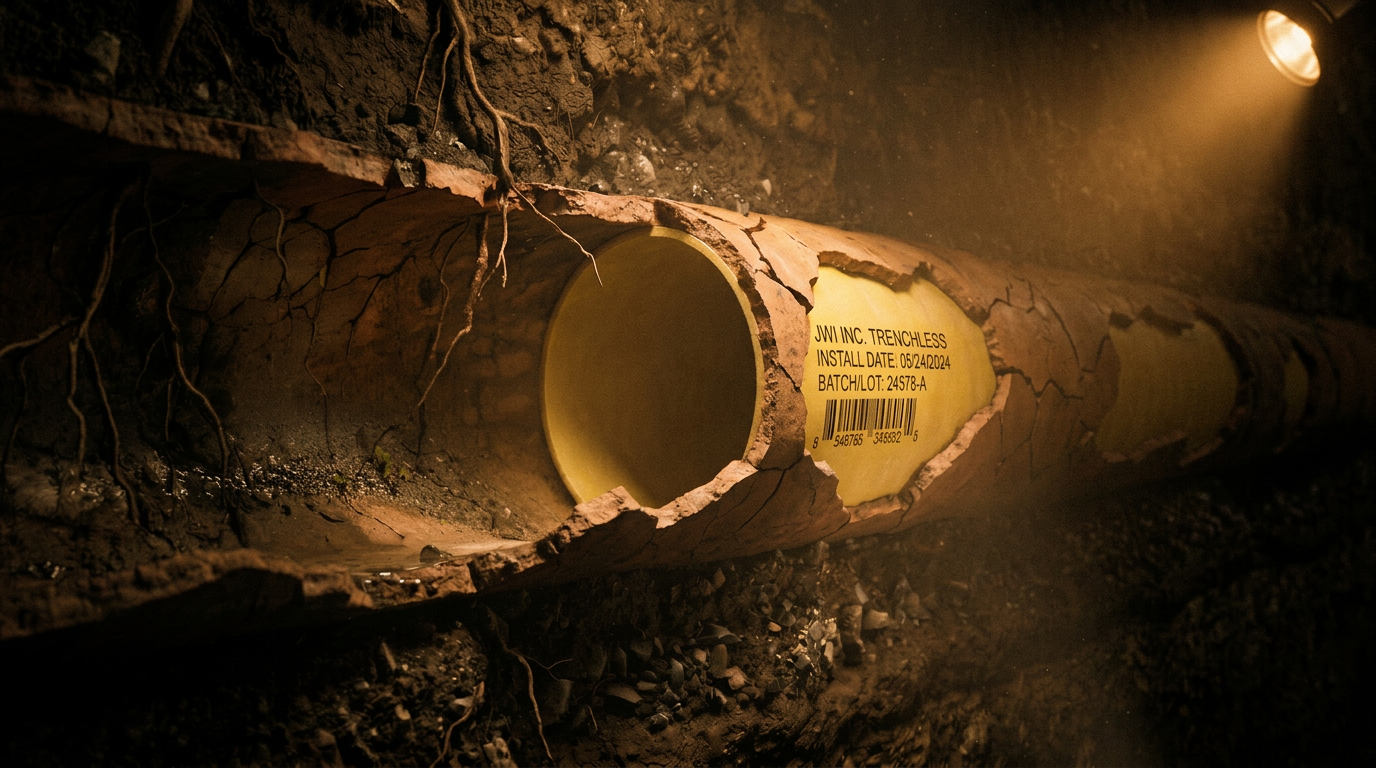
Drag to reveal the lined pipe
Trenchless rehabilitation is usually considered after CCTV review, recurring backups, joint failure, root intrusion, or surface distress over a buried line. Below, see the conditions, then how JWI handles each defect with CIPP lining, spot repair, or replacement coordination matched to pipe geometry, access, and facility operations.
On commercial campuses, municipal corridors, and industrial sites, a failing buried line rarely stays a maintenance ticket. It becomes a facility operations problem, a tenant issue, a permit question, and a restoration budget before anyone discusses liner resin specs.
Root intrusion, joint separation, corrosion, offset joints, or infiltration identified on CCTV or after repeat backups.
Grease carryover, slow drains, odor complaints, wet-well cycling, or I&I contribution during wet weather.
Loading dock delays, retail access complaints, healthcare compliance scrutiny, or emergency callouts that do not fix the host pipe.
Repeated jetting, spot digs, or a full open-cut quote with pavement removal along the entire alignment.
Photo-led field review below: see how JWI handles root intrusion, joint failure, corrosion, and infiltration before open-cut replacement is assumed.
Buried sewer defects do not all need the same repair path. JWI matches CIPP lining, spot repair, or replacement coordination to what CCTV and field access actually show before assuming a full open-cut corridor quote.
When you see this
JWI handles this by reviewing CCTV findings, coordinating line cleaning, and planning CIPP lining where host pipe geometry and access pits support a continuous liner run.
When you see this
JWI handles this by confirming remaining pipe roundness after cleaning, then installing a cured-in-place liner to restore structural continuity and seal interior surfaces where lining limits allow.
When you see this
JWI handles this by inspection-led trenchless scoping, lining where bends, connections, and access support it, or localized spot repair where liner continuity is not practical.
When you see this
JWI handles this by manhole-to-manhole CIPP lining where liner continuity addresses joint leakage and engineer or authority specifications support the rehabilitation path.
When you see this
JWI handles this by ruling in or out lining feasibility first, then coordinating spot repair, excavation, or engineer-led replacement when host pipe geometry no longer supports CIPP.
Contact JWI
Send inspection findings. We will review the repair path
If CCTV, backups, surface distress, or wet-weather behavior point to a failing sewer main or lateral, send JWI the inspection findings, pipe details, and shutdown constraints. We can discuss whether CIPP lining, spot repair, or replacement may fit.
Specialty field contracting for commercial, municipal, and infrastructure properties.
Jump to project inquiry formThe pipe failure is underground. The business impact is measured in closures, permits, utility markouts, restoration, and how long critical access stays offline.
| Site factor | Full open-cut path | Trenchless CIPP path |
|---|---|---|
| Surface disruption | Continuous trench along the pipe alignment through pavement, landscaping, or slab areas. | Localized access pits at manholes or entry points; most of the alignment stays intact. |
| Utility markouts | Markouts and potholing along the full run where crossings and parallel utilities are present. | Markouts concentrated at pit zones and known conflict points. |
| Traffic and parking | Lane closures, lot sections, or dock lanes out of service for the full excavation length. | Point closures at pits; many sites keep primary access open between work windows. |
| Tenant and retail access | Extended storefront or campus frontage disruption while trench is open and backfilled. | Shorter surface impact windows; work can often phase around business hours. |
| Permits and ROW | Broader excavation permit scope, spoil handling, and restoration along the corridor. | Reduced open excavation can simplify some ROW and restoration scopes when lining is feasible. |
| Return to service | Backfill, compaction, paving, and landscape restore across the full trench length. | Liner cure plus pit restoration at limited access points after connections are reinstated. |
JWI solves scope uncertainty by reviewing CCTV findings, host pipe geometry, access constraints, and operational shutdown limits before recommending CIPP lining, spot repair, or open-cut replacement.
Trenchless lining depends on host pipe geometry, defect severity, access, bends, service connections, flow control, cleaning, and project requirements. A structurally viable line with joint leakage or root intrusion may be a lining candidate after CCTV review. A collapsed segment, severe offset, required upsizing, inaccessible run, or incompatible pipe condition may need spot repair, excavation, or replacement instead.
JWI reviews the inspection findings before discussing the method. The goal is to match the repair path to the pipe condition, the site constraints, and the owner's operational needs.
Trenchless pipe rehabilitation addresses deteriorated buried pipelines without the surface disruption of full open-cut replacement. On commercial campuses, municipal collection systems, and industrial sites across the Northeast, sewer mains and laterals often fail from root intrusion, joint separation, corrosion, infiltration, and age-related structural loss. When inspection shows that the host pipe retains enough geometry to accept a liner and access points are workable, cured-in-place pipe (CIPP) lining may restore a continuous structural pipe within the existing line.
CIPP lining installs a resin-impregnated flexible tube that is inverted or pulled into the host pipe, then cured with steam, hot water, or UV light depending on system selection, project specifications, and field conditions. The result is a new pipe wall bonded to the interior of the existing line, sealing joints, closing root paths, and improving hydraulic performance where the method is appropriate. Liner thickness, resin type, and cure method are selected based on pipe diameter, material, depth, bends, service connections, and engineer or manufacturer requirements.
Trenchless methods are not universal. Collapsed pipe, severe offset beyond lining limits, incompatible materials, required capacity upsizing, or inaccessible segments may still require point repair, excavation, or replacement. JWI reviews CCTV findings, as-built information when available, manhole or access conditions, bypass or flow management needs, and surface constraints before recommending CIPP or related trenchless approaches. We coordinate with engineers, owners, and contractors; we do not provide formal PACP/MACP pipeline coding programs, hydraulic modeling, or engineering design unless directed under separate professional scope.
Commercial and municipal buyers typically need repair paths that limit pavement removal, tenant disruption, and restoration cost. Trenchless lining may reduce open trench length to access pits, connection points, or short excavations where lining equipment must enter the line. Industrial facilities may require phasing around production schedules, confined access, and safety plans for occupied sites.
We provide specialty field contracting for trenchless pipeline rehabilitation, including CIPP lining coordination and related pipeline repair scopes on commercial, municipal, industrial, institutional, and infrastructure properties. Engineering design, regulatory determinations, and formal inspection reporting should come from appropriate licensed professionals when required.
For property managers, wastewater authorities, and facility engineers in Connecticut, New York, New Jersey, Pennsylvania, and Massachusetts, practical trenchless rehabilitation may extend pipeline service life and reduce emergency excavation when inspection data supports lining and access is feasible.
When pipeline defects tie to manhole infiltration or structure deterioration, related work may include Concrete Restoration & Coatings, Chemical Grout Injection, and Linings.
Engineering design, structural determinations, geotechnical engineering opinions, and regulatory interpretations should be provided by the appropriate licensed professionals when required.
| Condition | Structure or environment | Possible service path | Notes |
|---|---|---|---|
| Root intrusion and joint leakage in a structurally viable clay or cast iron main | Municipal collection main beneath a paved street | CIPP lining may be appropriate after cleaning and CCTV confirmation of host pipe geometry | Service connections may require reinstatement planning before lining mobilization. |
| Recurring backups in a commercial campus lateral with CCTV showing joint failure | Private sewer lateral serving retail or office buildings | Trenchless lining or targeted repair may be appropriate based on diameter, bends, and access | Tenant access and business hours often drive phasing and pit location. |
| Corrosion and tuberculation reducing capacity in an industrial sanitary line | In-plant buried sewer segment | CIPP lining may be appropriate after flow bypass and interior cleaning | Process shutdown windows and confined-space entry may apply. |
| Infiltration at joints contributing to I&I on a municipal main | Collection system segment between manholes | Manhole-to-manhole CIPP lining may be appropriate where liner continuity addresses joint leakage | Broader I&I strategy should be guided by authority engineering programs. |
| Partial collapse or severe offset beyond lining limits | Buried sewer main with structural failure | Point repair or open-cut replacement may be appropriate rather than full-length CIPP | Inspection data determines whether trenchless methods remain feasible. |
| Failed short lining attempt or delaminated prior liner | Previously rehabilitated sewer segment | Field review of host pipe and prior liner before re-lining or spot repair may be appropriate | Substrate preparation and root cause review matter before a second lining cycle. |
| Force main leakage at joints or corrosion zones | Municipal or industrial pressure sewer | Engineer-directed pressure-rated lining or alternative repair where specified | Pressure service requires compatible systems and testing protocols. |
| Pavement settlement over a deteriorated sewer alignment | Commercial drive or municipal roadway | CCTV assessment, then lining or localized repair where inspection findings support the repair path | Surface distress may indicate voids or pipe failure requiring inspection first. |
Liner resin, cure method, and access pit planning depend on pipe diameter, material, bends, connections, and engineer specifications where provided. JWI coordinates CIPP installation and related pipeline repair scopes after inspection data confirms host pipe geometry and site access.
Municipal collection system programs often coordinate trenchless lining with Manhole & Vault Grouting.
Trenchless lining reduces open trench length, but commercial projects still live or die on how well bypass, ROW, markouts, and access phasing are planned before mobilization.
JWI plans around the hours your site can tolerate flow interruption or branch isolation.
Active lines may need plugging, bypass, or wet-well management before cleaning and lining begin.
Even trenchless work touches the right-of-way when pits open in streets, sidewalks, or easements.
Pit zones must be cleared for gas, electric, telecom, and parallel sewer or water crossings.
Commercial sites need clear paths for deliveries, patients, shoppers, or emergency access during pit work.
The repair succeeds when operations, property management, and engineers share the same outage plan.
A municipal main with joint infiltration and intact round geometry may be a CIPP candidate after cleaning, while a partially collapsed segment may require point repair or replacement instead of full-length lining.
Commercial laterals with tight bends, multiple connections, or limited access pits need lining system and pit planning reviewed before mobilization, especially on occupied campuses and retail sites.
Commercial trenchless work succeeds when pipe technology and facility operations are planned together. This is the sequence owners, engineers, and facilities teams need before pits open.
Stop guessing from repeat jetting bills.
Assess CCTV, pipe material, diameter, bends, and defect type before recommending lining.
Know whether lining fits before committing to a full open-cut corridor.
Rule in or out collapse, severe offset, and connection complexity that may need spot repair.
Align the repair with facility ops, not just pipe geometry.
Coordinate pit locations, bypass needs, markouts, traffic control, and permit timing with your team.
Protect revenue hours, patient access, or production shifts.
Phase mobilization for off-peak windows, holidays, or planned outages when possible.
A liner is only as good as the host pipe prep.
Coordinate debris removal, root cutting, and line prep so the liner can bond and cure correctly.
Restore structural continuity without a full-length trench.
Place and cure the liner per specification; hold points when engineer or manufacturer criteria apply.
Return service with records facilities and authorities can file.
Reopen connections, restore pits, and provide closeout information for asset and permit files.
JWI provides specialty field contracting coordinated with engineers, owners, and project teams. Engineering design, regulatory determinations, formal condition ratings, and hydraulic analysis should be provided by the appropriate licensed or qualified professionals when required.
Assess CCTV footage, engineer reports, pipe material, diameter, and defect types; confirm access points and operational constraints.
Determine whether CIPP lining, spot repair, or replacement better matches pipe geometry, collapse risk, and project goals.
Locate pits, coordinate bypass pumping or flow control, and plan traffic, tenant, and safety measures with owner or contractor teams.
Coordinate debris removal, root cutting, and line preparation so the host pipe is ready for liner installation per project requirements.
Place CIPP liner using inversion or pull-in methods; cure per manufacturer and specification with hold points as directed.
Restore lateral and service openings; verify continuity and complete required inspection steps before return to service.
Provide field records, photos, and closeout information for asset files, authority programs, or project requirements where applicable.
We support trenchless sewer and pipeline rehabilitation on commercial, municipal, industrial, and institutional properties where CIPP lining or related methods may reduce excavation and surface restoration compared with full open-cut replacement where feasible.
Pipeline rehabilitation often follows CCTV review, engineer direction, or recurring backup events. JWI provides specialty field contracting coordinated with inspection findings and project teams. Engineering design, regulatory determinations, formal condition ratings, and hydraulic analysis should be provided by the appropriate licensed or qualified professionals when required.
JWI supports commercial, municipal, industrial, institutional, and infrastructure properties across Connecticut, New York, New Jersey, Pennsylvania, and Massachusetts. Our work is suited for facilities where water intrusion, soil loss, slab movement, voids, concrete deterioration, or below-grade infrastructure failure can disrupt operations, create safety concerns, or increase long-term repair costs.
For trenchless pipe rehabilitation, JWI reviews CCTV findings, access constraints, and lining feasibility on commercial campuses, municipal mains, and industrial sewer segments before discussing CIPP or related repair paths.
View the service area for CT, NY, NJ, PA, and MA commercial propertiesMaterial and field-system reference pages related to this scope. They support buyer education and are not a substitute for site review.
View all technical systems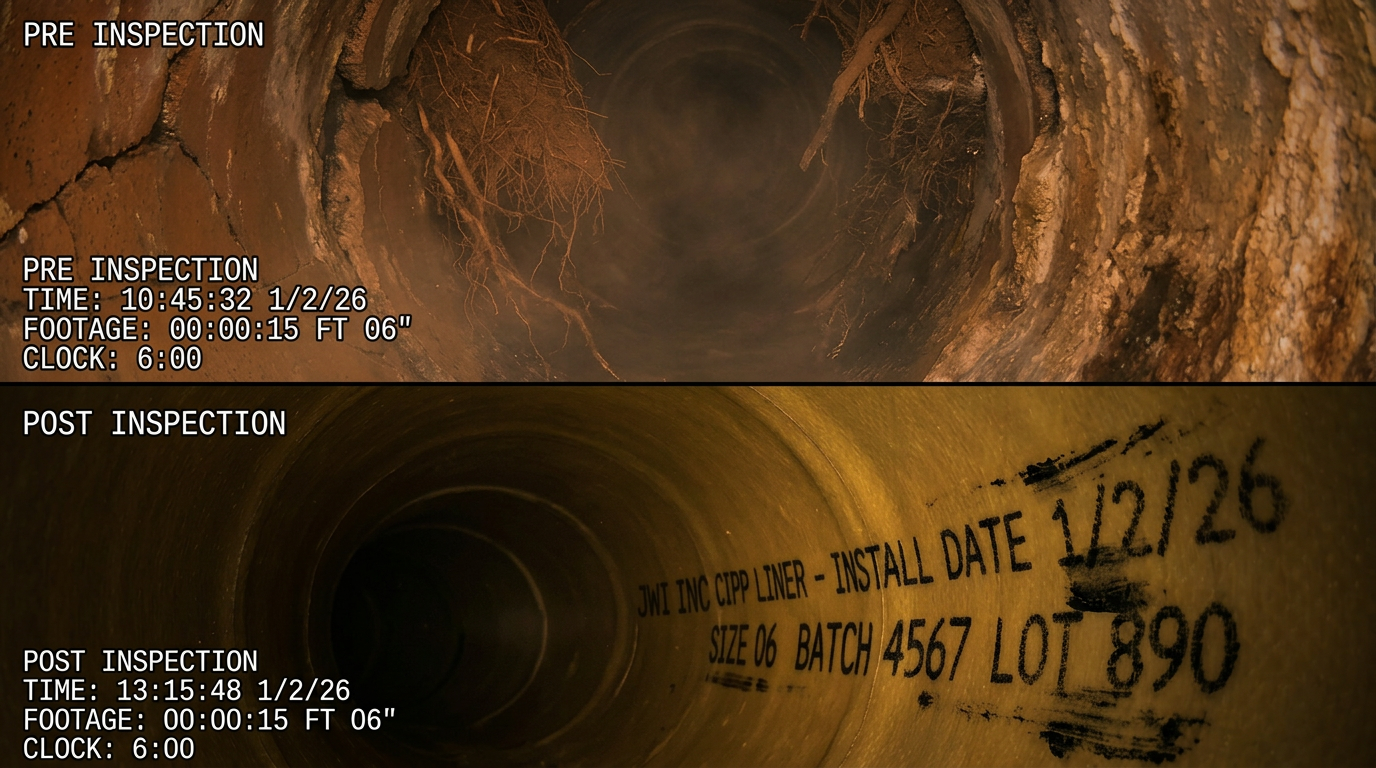
If CCTV, backups, surface distress, or wet-weather behavior point to a failing sewer main, force main, or commercial pipeline segment, send JWI the inspection findings, pipe details, access information, and shutdown constraints. We can review the condition and discuss whether CIPP lining, spot repair, replacement, or another repair path may be appropriate.
Helpful to include
Step 1 of 4
Contact