
Soil Stabilization for Commercial Properties
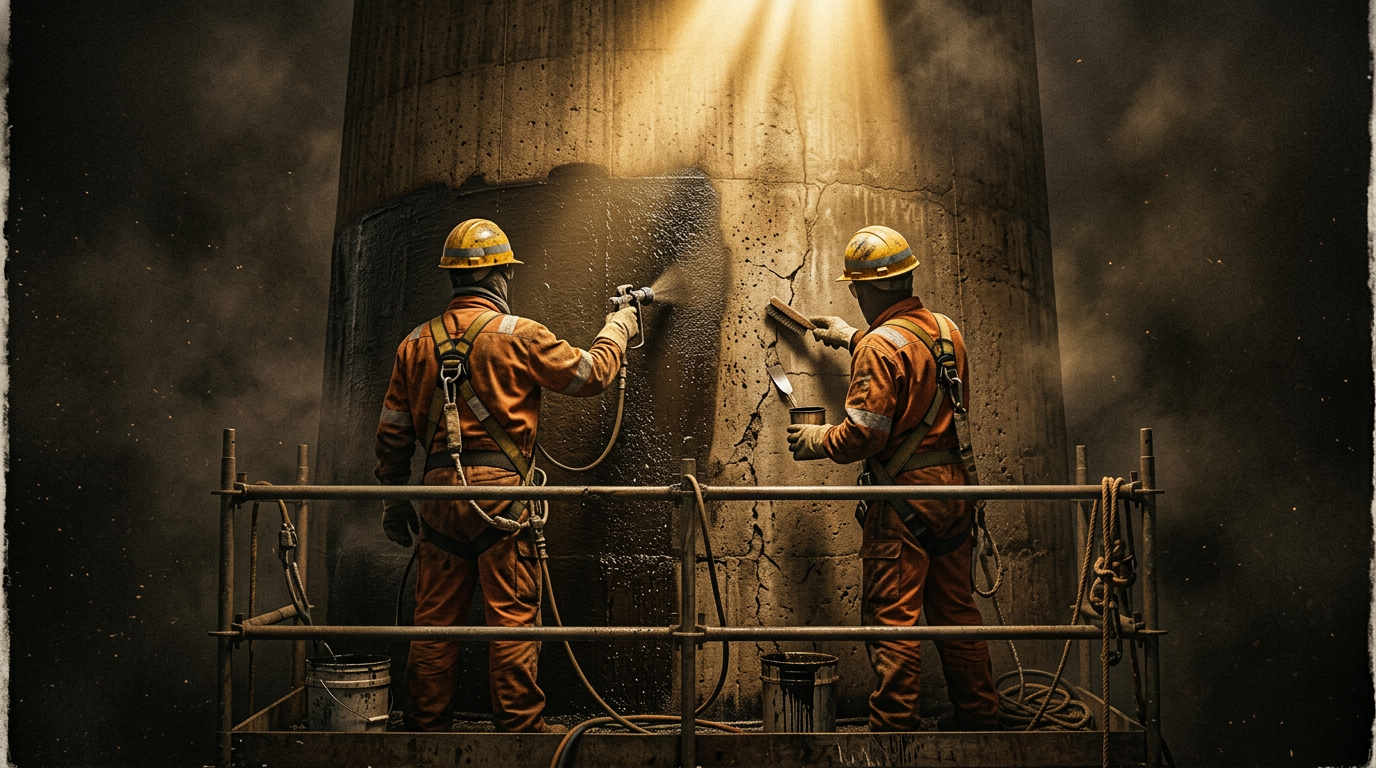
Soil stabilization for commercial and infrastructure properties addresses compromised soils affected by washout, groundwater movement, erosion, and poor compaction, helping restore more consistent support for foundations, slabs, utility vaults, and below-grade structures.
- Washout & erosion repair
- Foundation & slab subgrade support
- Utility structure stabilization
- Permeation & compaction methods
- Municipal & industrial sites
- Engineer-coordinated scopes
Specialty field contractor with engineer-directed scopes where applicable; we serve CT, NY, NJ, PA, and MA commercial properties.
Request a Commercial Assessment
If you are seeing settlement, washout, or soil loss affecting a commercial or infrastructure structure, we can review the condition and discuss a practical stabilization path.
Step 1 of 4
Contact
Specialty field contractor with engineer-directed scopes where applicable; we serve CT, NY, NJ, PA, and MA commercial properties.
Commercial Soil Stabilization Problems JWI Solves
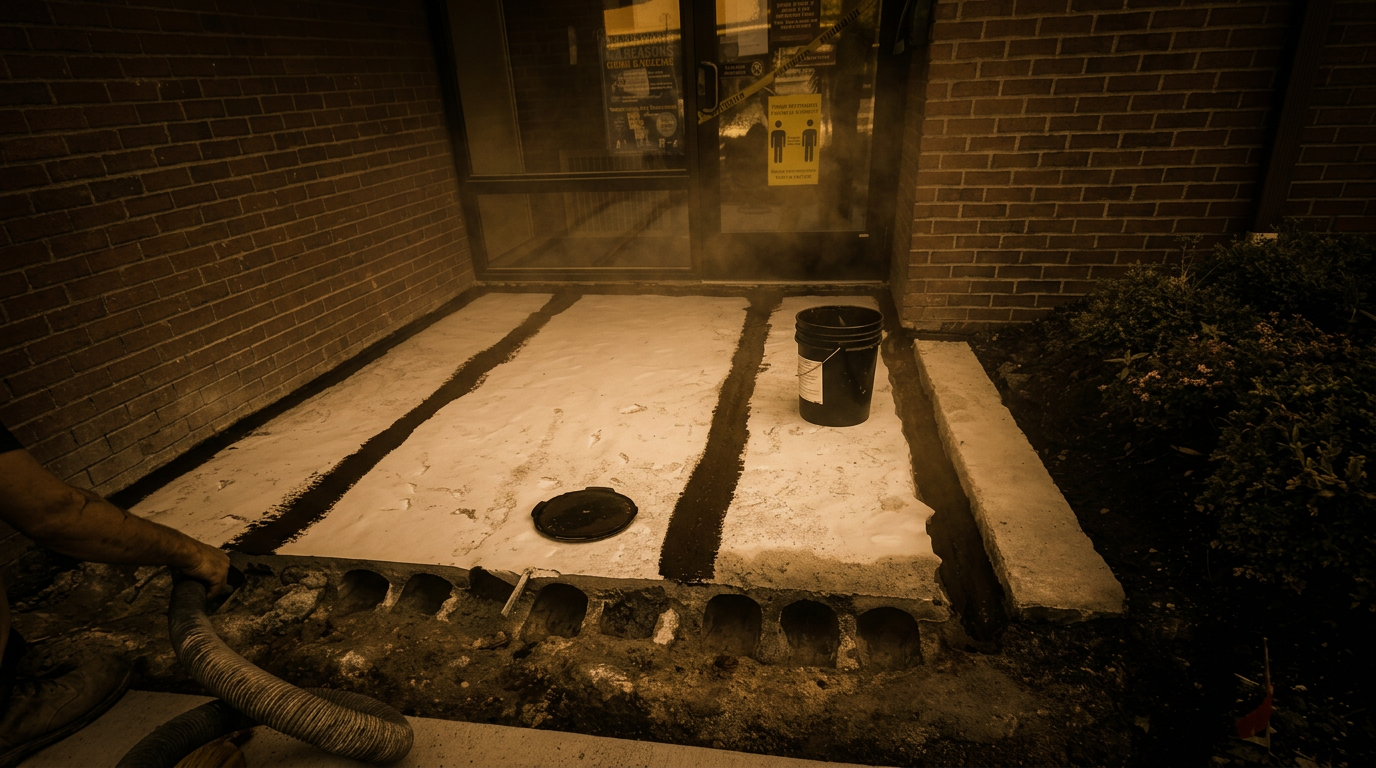
Commercial soil stabilization work usually starts when settlement, soil washout, slab movement, or structure-adjacent erosion begins showing up at the surface. JWI supports owners, engineers, municipalities, and facility teams with field methods selected around the actual soil condition, water behavior, access, and project constraints.
- 01Soil loss and washout near foundations and footings
- 02Erosion below slabs in traffic and loading areas
- 03Settlement from inconsistent or loose subgrade support
- 04Granular soils migrating under equipment pads
- 05Water-driven soil piping along drainage paths
- 06Loss of support under commercial floor loads
- 07Soil instability around manholes, vaults, and utility structures
- 08Repeated settlement after surface patching or re-leveling
- 09Poor original compaction showing up years after construction
- 10Subgrade softening from utility leaks or groundwater shifts
- 11Erosion at retaining walls and below-grade structure surrounds
- 12Differential settlement threatening slab joints and transitions
Commercial Soil Stabilization for Washout, Settlement, and Poor Support Conditions
Soil stabilization addresses conditions where the ground no longer provides reliable support for structures, slabs, or infrastructure elements above it. On commercial, municipal, and industrial sites across the Northeast, soil problems often develop gradually from groundwater movement, poor original compaction, utility leaks, freeze-thaw cycling, or erosion along drainage paths, until cracks, settlement, or movement appear at the surface. The visible symptom is rarely the full story; the soil behavior below grade is what determines whether repairs hold.
Surface patching, joint sealing, or re-leveling alone may not address the soil condition underneath. When washout, piping, or loose granular layers are present, loads continue to redistribute into weaker zones and settlement can return. Depending on site conditions, we may use permeation grouting, compaction or displacement grouting, controlled fill placement, or related field methods to improve soil density, reduce water migration, and help restore more consistent support conditions where access and project requirements allow. Method selection follows field review, not a default product or technique applied to every site.
Permeation grouting can bind loose granular soils and reduce permeability in selected zones when gradation and groundwater behavior suit the approach. Compaction or displacement grouting may be appropriate where soft layers or localized voids need densification under load. When water is actively moving soil, addressing the water path is often part of the stabilization strategy rather than an optional follow-up. Soil type, depth, structure sensitivity, and operational constraints all influence which path is practical at a given facility.
We evaluate soil behavior, water sources, structure type, access, and operational constraints before selecting a field approach. Work may be coordinated with engineer-directed specifications where applicable. For occupied facilities, sequencing, cure times, and shutdown windows are planned to limit disruption to operations, traffic, and adjacent utilities. JWI is a specialty field contractor, not a geotechnical engineering firm. Engineering design, bearing determinations, and regulatory interpretations should be provided by licensed professionals when required.
Soil stabilization matters for commercial and infrastructure properties because soil instability can affect slab performance, foundation elements, utility structures, and long-term maintenance costs, especially where heavy loads, traffic, or critical equipment depend on stable support below grade. Addressing the soil condition early may reduce progressive settlement and limit the scope of structural repairs over time.
When soil loss has already created open cavities below a slab, the repair path may also involve Concrete Leveling & Slab Stabilization, Low-Density Cellular Concrete, Void Filling & Sub-Slab Stabilization, and Chemical Grouts.
Engineering design, structural determinations, geotechnical engineering opinions, and regulatory interpretations should be provided by the appropriate licensed professionals when required.
Soil Stabilization Condition-to-Method Paths
| Condition | Structure or environment | Possible service path | Notes |
|---|---|---|---|
| Washout below a warehouse slab in a loading zone | Industrial floor slab over granular fill | Compaction or permeation grouting through drilled access; water path review | Slab may remain in service with zoned work; settlement history and load paths guide port layout. |
| Soil loss around a municipal utility vault | Precast or cast-in-place vault with eroding annulus | Annulus grouting and surround densification to reduce continued soil migration | Often coordinated with leak sealing scopes; confined space and traffic control may apply. |
| Loss of subgrade support under a new equipment pad addition | Loose fill or undocumented subgrade below pad footprint | Compaction grouting or controlled fill to improve support before pad placement | May follow geotechnical recommendations; load magnitude and pad sensitivity shape method. |
| Recurring settlement at a parking structure transition | Slab-on-grade at ramp or joint with differential movement | Subgrade stabilization targeting loose layers; may pair with slab work if elevation is affected | Identifying whether erosion or compaction deficiency is the driver avoids repeat repairs. |
| Erosion along a foundation perimeter below grade | Commercial building footing with soil loss at drainage concentration points | Permeation or compaction grouting plus drainage path review at concentration zones | Exterior access and landscaping constraints affect sequencing; occupied building phasing common. |
| Granular soil piping near a pump station wet well | Below-grade structure with active groundwater and soil migration | Grout placement to reduce permeability and stabilize surrounds; water source evaluation | Wastewater environment may require product compatibility review and shutdown coordination. |
| Embankment or approach fill settlement at infrastructure | Bridge approach, culvert headwall, or retaining structure backfill | Displacement or compaction grouting in loose fill zones; staged placement under traffic limits | DOT or municipal access windows and lane closures are planned in advance. |
| Soft subgrade discovered during commercial renovation | Slab or foundation area with undocumented fill or variable compaction | Targeted densification or fill improvement before new loads are introduced | Renovation schedules often drive cure-time and return-to-service requirements. |
Soil Stabilization Methods, Grouts, and Controlled Fill Materials
Commercial soil stabilization is not a one-product decision. Loose granular soils, active groundwater, shallow voids, foundation-adjacent washout, and slab settlement each require a different field approach. JWI selects grouts, densification methods, and controlled fill materials after reviewing soil behavior and structure sensitivity.
- Permeation grouting to bind loose granular soils and reduce water migration in selected zones
- Compaction grouting for localized densification of soft or loose layers under load
- Displacement grouting where voids or weak lenses require controlled pressure placement
- Cementitious grout systems for soil binding where gradation and water chemistry allow
- Low-modulus or flexible grout formulations for sensitive structures and confined zones
- Controlled fill placement to restore subgrade support where excavation access is practical
- Annulus and surround stabilization at utility structures losing soil to erosion
- Phased injection sequencing to limit heave risk near foundations and slabs
- Water path mitigation coordinated with grout placement when active flow is present
- Engineer-specified grout products and placement criteria when directed by project documents
Where Commercial Soil Stabilization Applies
Soil instability around utility structures often overlaps with Manhole & Vault Grouting, and Chemical Grout Injection.
- Commercial building foundations and footings
- Industrial plant slabs and equipment pads
- Parking structures and loading docks
- Municipal utility vaults and manholes
- Wastewater treatment facilities and wet wells
- Pump stations and below-grade utility structures
- Institutional campuses and healthcare facilities
- Power generation and industrial process sites
- Bridge approaches, abutments, and embankments
- Retaining walls and below-grade structure surrounds
- Tunnel and conduit backfill zones
- Tank and containment foundations
Choosing the Right Soil Stabilization Method
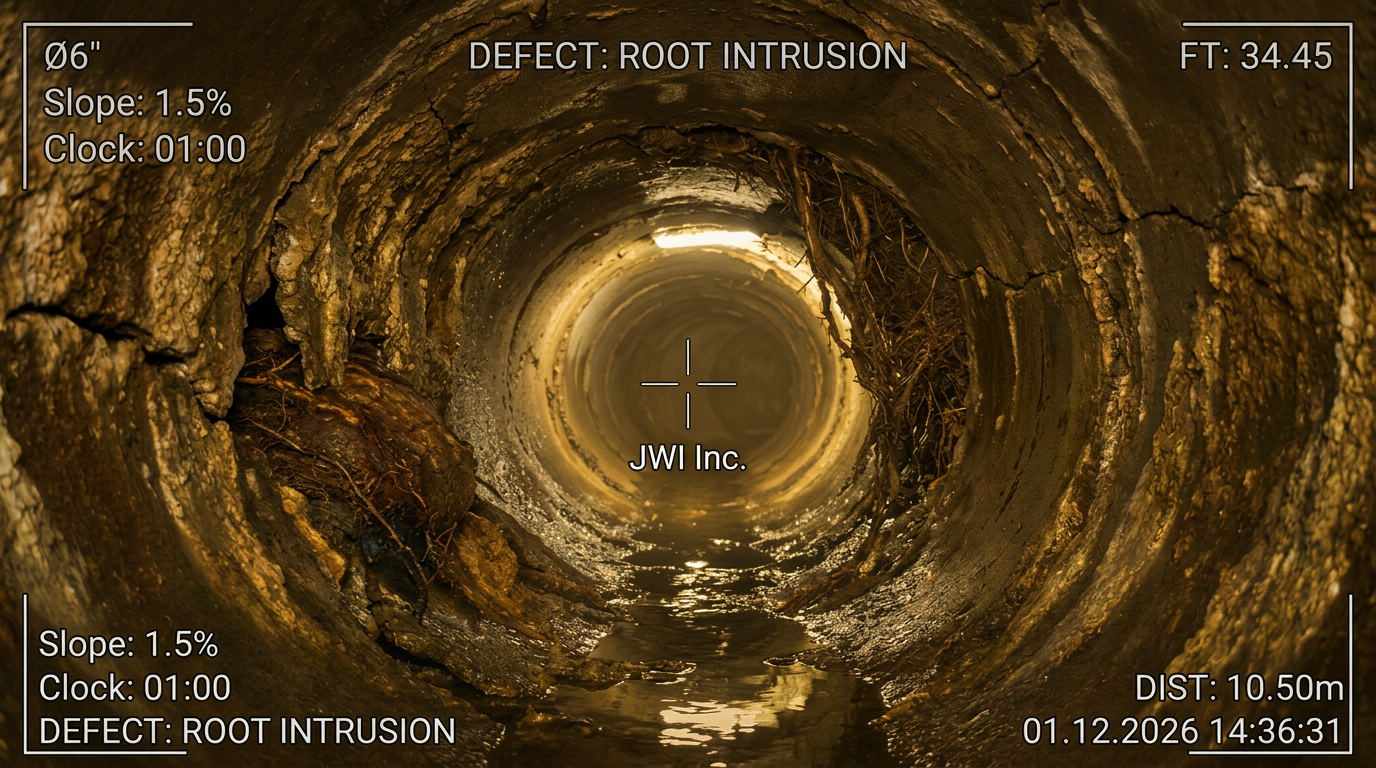
Washout below a warehouse slab, soil piping at a utility vault, and loose fill under an equipment pad are different soil problems, even when the visible symptom is settlement or cracking. Soil stabilization method selection depends on whether the driver is erosion, granular migration, active groundwater, poor compaction, or a combination.
Permeation grouting may suit loose granular soils where binding and permeability reduction are the goals. Compaction or displacement grouting may be appropriate where soft layers need densification under load. When water is actively moving soil, addressing the water path is often part of the stabilization strategy, not an afterthought.
Commercial Soil Stabilization Field Process
Review the Condition
Assess visible settlement, cracks, water signs, and structure type; review photos, reports, or drawings when provided.
Identify Soil & Water Issues
Evaluate likely soil loss, washout paths, and subgrade support concerns based on site observations and project information.
Coordinate Access
Plan around occupied areas, equipment, traffic, and any operational or safety constraints.
Select Stabilization Approach
Choose permeation, compaction, displacement, or fill methods suited to soil conditions and project requirements.
Execute Field Work
Perform grouting or fill placement with appropriate preparation, monitoring, and protection of adjacent areas.
Verify Completed Work
Confirm work meets agreed visual or project criteria; document placement where applicable.
Provide Documentation
Supply field notes, product data, or submittal support where required by the project.
Soil Stabilization for Commercial, Municipal, and Industrial Sites
We perform soil stabilization at commercial, municipal, and infrastructure sites where washout, erosion, and loose subgrade conditions threaten slabs, foundations, and utility structures under active loads.
As a specialty field contractor, we execute permeation grouting, compaction grouting, and related stabilization scopes, coordinating with engineers, GCs, and facility teams on access, sequencing, and documentation when specifications or project documents direct the work.
- Commercial and municipal infrastructure
- Wastewater and utility facilities
- Industrial plants and equipment areas
- Occupied facility coordination
- Work with engineers, GCs, and owners
- Safety and access planning
- Product data and SDS coordination
- Submittal support where applicable
- Sequencing with other trades
Serving CT, NY, NJ, PA, and MA Commercial Properties
JWI supports commercial, municipal, industrial, institutional, and infrastructure properties across Connecticut, New York, New Jersey, Pennsylvania, and Massachusetts. Our work is suited for facilities where water intrusion, soil loss, slab movement, voids, concrete deterioration, or below-grade infrastructure failure can disrupt operations, create safety concerns, or increase long-term repair costs.
For soil stabilization work, this often means addressing washout, erosion, poor support, and foundation-adjacent soil loss before those conditions create larger slab, utility, or infrastructure problems.
View the service area for CT, NY, NJ, PA, and MA commercial propertiesRelated Technical Systems
Material and field-system reference pages related to this scope. They support buyer education and are not a substitute for site review.
View all technical systemsCommercial Soil Stabilization FAQs
Discuss Soil Conditions at Your Site
If you are seeing settlement, washout, or soil loss affecting a commercial or infrastructure structure, we can review the condition and discuss a practical stabilization path.
- Site location (CT, NY, NJ, PA, or MA)
- Structure type and use
- Photos or video of settlement or erosion
- Known water or drainage conditions
- Existing reports or drawings, if available
- Access limitations or operational constraints
Step 1 of 4
Contact