

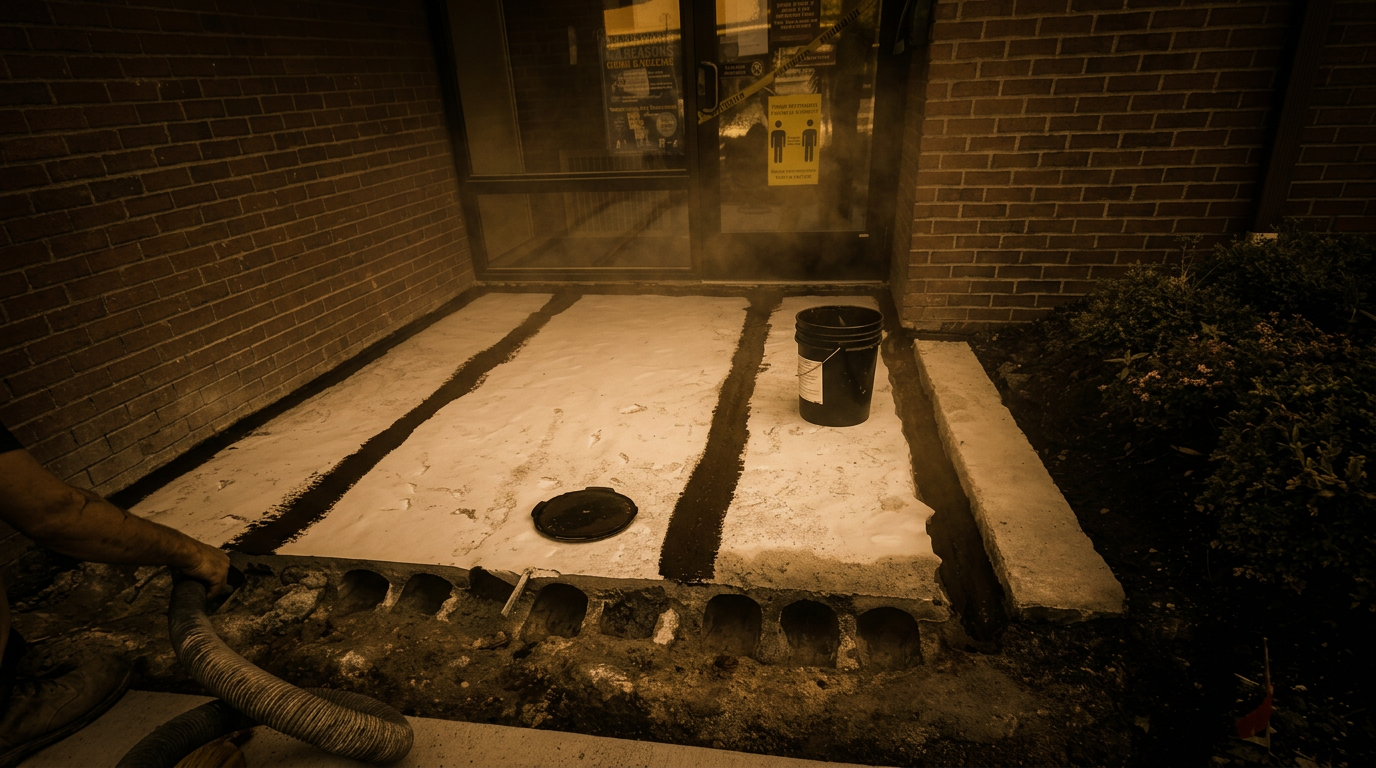
Low-Density Cellular Concrete for Void Fill and Lightweight Backfill
Low-density cellular concrete (LDCC) is a lightweight, flowable cementitious fill used for void filling, abandonments, trench and backfill conditions, and infrastructure support applications where lower unit weight or flowability is important. Mix design, density, strength, placement, and curing should follow project specifications and product or engineering requirements.
- Lightweight flowable fill
- Void and abandonment fill
- Utility trench backfill
- Specified mix design
Serving CT, NY, NJ, PA, and MA Commercial Properties
Low-density cellular concrete
Low-density cellular concrete is produced by combining cement slurry with a preformed foam to create a lightweight, flowable material with lower unit weight than conventional concrete. Density and strength vary with mix design.
LDCC can flow into irregular voids and confined spaces where rigid fill or hand placement is impractical, when project requirements allow its use and access supports placement.
JWI may place LDCC as a specialty field contractor. JWI does not perform geotechnical design or bearing calculations. Those remain engineering determinations when required.
Commercial & Infrastructure Applications
- Void filling beneath slabs, pavements, and structures
- Abandoned pipe, culvert, or structure fill where applicable
- Utility trench and annular space fill
- Lightweight backfill over sensitive utilities or weak zones
- Sub-slab voids and sinkhole-related cavities where specified
- Infrastructure fills requiring controlled unit weight
- Foundation-adjacent fills when engineer specifications allow
What Problems It Helps Address
- Subsidence risk from voids beneath slabs or pavements
- Abandoned underground elements requiring fill before surface restoration
- Need for flowable fill in irregular or inaccessible cavities
- Requirement for lower unit weight than conventional grout or concrete
- Trench backfill conditions where controlled density is specified
When This System May Be Appropriate
LDCC may be selected when lightweight, flowable fill is needed and specifications allow. Other materials may be more appropriate when:
- High compressive strength or structural concrete is required. Conventional concrete or engineer-directed methods may apply.
- Active water inflow must be controlled before fill placement
- Very small voids are better addressed with injection grout
- Soil stabilization requires permeation or compaction concepts rather than fill
- Site access cannot support pumping equipment and hose layout
Limitations & Selection Factors
- Mix design, density, and strength must match project requirements
- Substrate and void geometry: fill volume and escape paths must be understood
- Active water: inflow may affect set and quality
- Access for pumping equipment, hoses, and venting
- Cure time and load application per specifications
- Structural support expectations: engineering determinations where applicable
- Adjacent utilities and sensitivity to buoyancy or lateral pressure
- Environmental and discharge requirements for wash water and spoil
- Compatibility with follow-on construction or surface restoration
- Manufacturer and engineer specifications where applicable
Material selection depends on field conditions, product requirements, substrate condition, exposure, and engineer direction where applicable. JWI provides specialty field contracting services, not engineering design or regulatory determinations.
Serving CT, NY, NJ, PA, and MA Commercial Properties
JWI supports commercial, municipal, industrial, institutional, and infrastructure properties across Connecticut, New York, New Jersey, Pennsylvania, and Massachusetts. Our work is suited for facilities where water intrusion, soil loss, slab movement, voids, concrete deterioration, or below-grade infrastructure failure can disrupt operations, create safety concerns, or increase long-term repair costs.
View the service area for CT, NY, NJ, PA, and MA commercial propertiesFrequently Asked Questions
Discuss a Void Fill or Lightweight Backfill Need
Send location, void or trench details, and any specifications so JWI can review whether LDCC placement may be appropriate.
- Site location and structure involved
- Photos or video of the condition
- Whether water is active or intermittent
- Drawings, specifications, or reports if available
- Access constraints and confined-space considerations
- Schedule or shutdown window if applicable