
Cementitious Repair Materials for Concrete Restoration
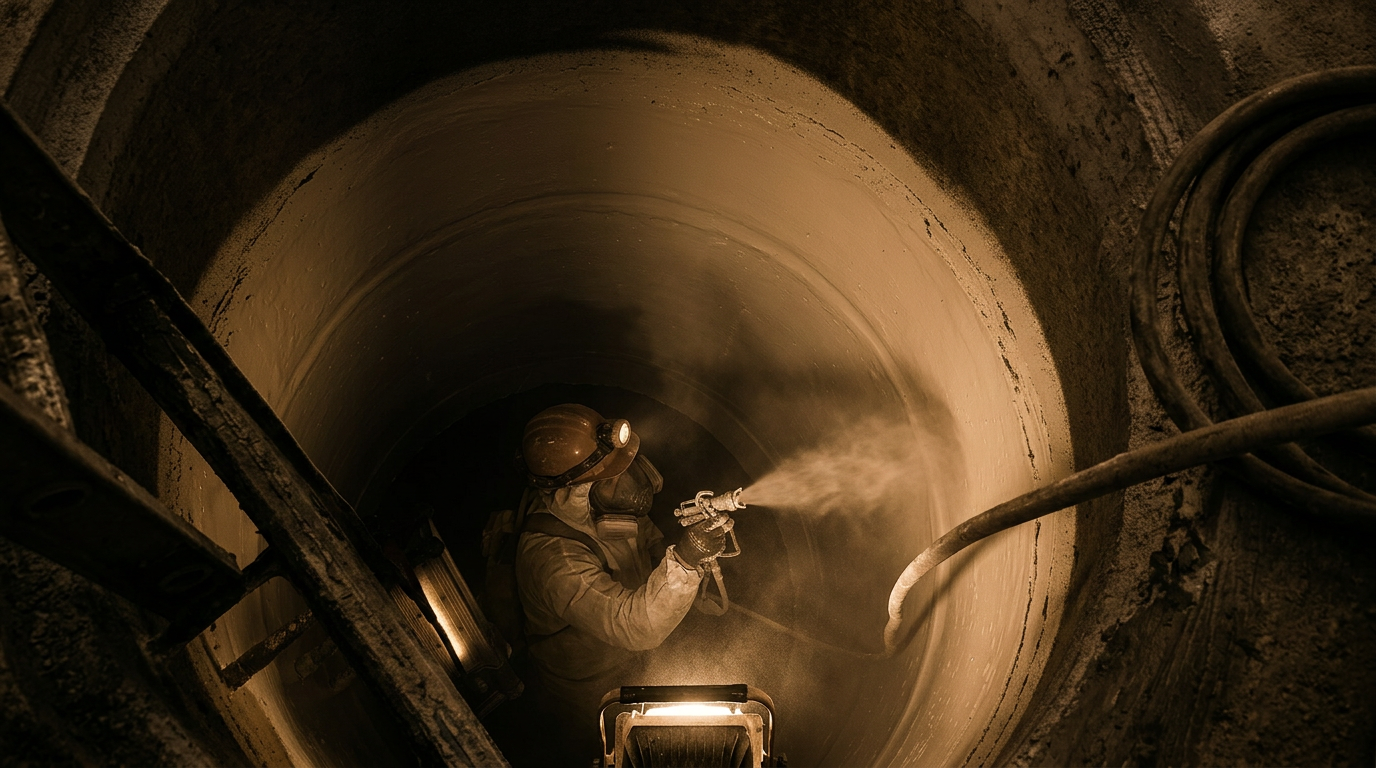
Cementitious repair materials may be used to restore deteriorated concrete surfaces, rebuild damaged areas, correct profiles, and prepare substrates for compatible protective systems. JWI may place repair mortars, overlays, and patching materials where appropriate before coatings, linings, or waterproofing scopes.
- Patching and resurfacing
- Substrate rebuild
- Coating and lining prep
- Wastewater and industrial concrete
Serving CT, NY, NJ, PA, and MA Commercial Properties
Cementitious concrete repair
Cementitious repair materials include polymer-modified mortars, patching compounds, resurfacers, and rebuild mixes designed to restore concrete geometry and surface condition. They are typically cement-based and compatible with concrete substrates when properly prepared.
These materials are often a preparatory or restorative step, not a standalone long-term protection system in aggressive environments. Coatings, linings, or waterproofing may follow when exposure requires.
JWI places cementitious repair materials per manufacturer instructions and project specifications. Mix design, thickness, and cure requirements should align with engineer direction where applicable.
Commercial & Infrastructure Applications
- Concrete restoration on commercial and infrastructure structures
- Wastewater tanks, channels, and treatment structures
- Manholes and utility vaults with spalling or surface loss
- Walls and slabs with localized damage
- Spall repair and edge rebuild before protective systems
- Resurfacing to correct profile before coatings or linings
- Industrial containment areas with concrete deterioration
What Problems It Helps Address
- Spalled or delaminated concrete surfaces
- Loss of cover and exposed reinforcement where repair scope allows
- Rough or irregular profiles that prevent coating adhesion
- Localized deterioration before broader rehabilitation
- Surface defects that would telegraph through thin coatings
When This System May Be Appropriate
Cementitious repair may be appropriate when substrate rebuild or profile correction is needed before protective work. Other approaches may be required when:
- Deep section loss or structural performance is in question. Engineer evaluation may be required.
- Active water flow must be controlled before repair placement
- Chemical exposure requires a specified lining system rather than mortar alone
- Large voids or subsurface cavities need fill materials. LDCC or grout injection may apply.
- Surface contamination requires media blasting or other prep before mortar bond
Limitations & Selection Factors
- Substrate preparation: laitance, contamination, and unsound concrete must be removed
- Active water: wet substrates may require pretreatment or different products
- Movement: cracks that continue to move may need flexible treatment before rigid repair
- Thickness and build limits per product data
- Water chemistry in wastewater and industrial environments
- Access and curing conditions in confined structures
- Cure time before coatings, linings, or return to service
- Compatibility with specified coating or lining systems
- Structural load requirements: engineering determinations where applicable
- Manufacturer instructions and specifications
Material selection depends on field conditions, product requirements, substrate condition, exposure, and engineer direction where applicable. JWI provides specialty field contracting services, not engineering design or regulatory determinations.
Serving CT, NY, NJ, PA, and MA Commercial Properties
JWI supports commercial, municipal, industrial, institutional, and infrastructure properties across Connecticut, New York, New Jersey, Pennsylvania, and Massachusetts. Our work is suited for facilities where water intrusion, soil loss, slab movement, voids, concrete deterioration, or below-grade infrastructure failure can disrupt operations, create safety concerns, or increase long-term repair costs.
View the service area for CT, NY, NJ, PA, and MA commercial propertiesFrequently Asked Questions
Discuss Concrete Deterioration or Spalling
Send photos, structure type, and exposure details so JWI can review whether cementitious repair may be part of an appropriate restoration sequence.
- Site location and structure involved
- Photos or video of the condition
- Whether water is active or intermittent
- Drawings, specifications, or reports if available
- Access constraints and confined-space considerations
- Schedule or shutdown window if applicable