

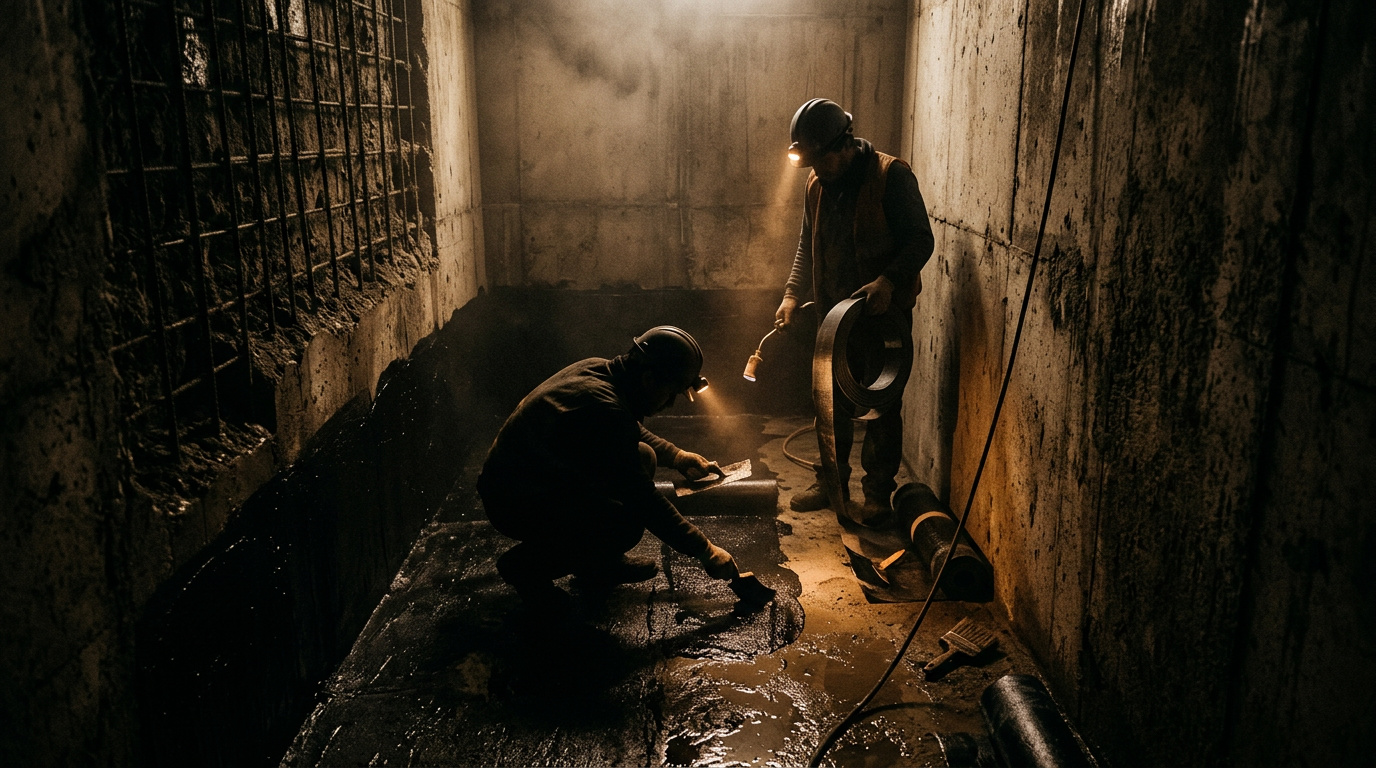
Hydrophilic Polyurethane Grouts for Wet Cracks and Joints
Hydrophilic polyurethane grout is commonly selected where a flexible plug or gasket-like seal is needed in wet cracks, joints, or below-grade leakage paths. These materials absorb water during reaction and may maintain different flexibility characteristics than hydrophobic grouts depending on product and exposure.
- Wet crack and joint injection
- Flexible seal behavior
- Below-grade leakage paths
- Product-specific selection
Serving CT, NY, NJ, PA, and MA Commercial Properties
Hydrophilic polyurethane grout
Hydrophilic polyurethane grout is a water-reactive injection material that absorbs water as it cures. Depending on the formulation, it may form a flexible, rubber-like mass that can accommodate minor movement at cracks and joints while helping reduce water passage.
These grouts are often used where the leakage path remains wet or intermittently wet, and where a more rigid hydrophobic reaction product may not be the right fit for joint behavior or re-wetting conditions.
JWI may coordinate placement of hydrophilic polyurethane grout where appropriate, following manufacturer instructions, product data, and engineer specifications when provided.
Commercial & Infrastructure Applications
- Wet cracks in below-grade walls and slabs
- Moving or working joints and cold joints
- Elevator pits with joint-related seepage
- Manhole and vault leakage at joints and interfaces
- Concrete wall penetrations with recurring seepage
- Utility structures with intermittent infiltration
- Concrete restoration prep zones where injection precedes coatings
What Problems It Helps Address
- Recurring seepage through wet cracks that reopen or weep after surface treatment
- Joint leakage where minor movement or thermal cycling affects seal performance
- Cold joint infiltration at below-grade transitions
- Penetration-related seepage where a flexible injection plug may help
- Chronic damp conditions at interfaces between dissimilar materials
When This System May Be Appropriate
Hydrophilic polyurethane grout may be appropriate when the path is wet or intermittently wet and a flexible injection seal is desired. Another approach may be more appropriate when:
- Active, high-volume water flow requires a hydrophobic reaction product. Leak control sequencing may differ.
- The crack is in sound, non-moving concrete and rigid bonding is specified. Epoxy injection may be directed.
- The substrate is deteriorated. Cementitious repair or surface preparation may be required first.
- Chemical exposure or immersion will degrade the grout. A lining or coating system may follow or replace injection.
- Engineer specifications require a different grout chemistry or performance criteria

Limitations & Selection Factors
- Substrate condition: spalled or unsound concrete may need repair before injection
- Active water: high flow rates may require pretreatment or hydrophobic grout before hydrophilic placement
- Movement: significant ongoing movement may exceed what a flexible grout can accommodate
- Crack behavior: very fine or actively widening cracks need evaluation before injection
- Water chemistry: aggressive groundwater or process water may affect durability
- Access: port placement must reach the full leakage path
- Cure time and return-to-service depend on product, temperature, and moisture
- Service environment: UV, chemicals, and abrasion may require overcoating where specified
- Product compatibility with adjacent materials and prior repairs
- Manufacturer instructions and engineer specifications where applicable
Material selection depends on field conditions, product requirements, substrate condition, exposure, and engineer direction where applicable. JWI provides specialty field contracting services, not engineering design or regulatory determinations.
Serving CT, NY, NJ, PA, and MA Commercial Properties
JWI supports commercial, municipal, industrial, institutional, and infrastructure properties across Connecticut, New York, New Jersey, Pennsylvania, and Massachusetts. Our work is suited for facilities where water intrusion, soil loss, slab movement, voids, concrete deterioration, or below-grade infrastructure failure can disrupt operations, create safety concerns, or increase long-term repair costs.
View the service area for CT, NY, NJ, PA, and MA commercial propertiesFrequently Asked Questions
Discuss a Wet Crack or Joint Condition
Share structure details and water behavior so JWI can review whether hydrophilic polyurethane injection or another approach may be appropriate.
- Site location and structure involved
- Photos or video of the condition
- Whether water is active or intermittent
- Drawings, specifications, or reports if available
- Access constraints and confined-space considerations
- Schedule or shutdown window if applicable